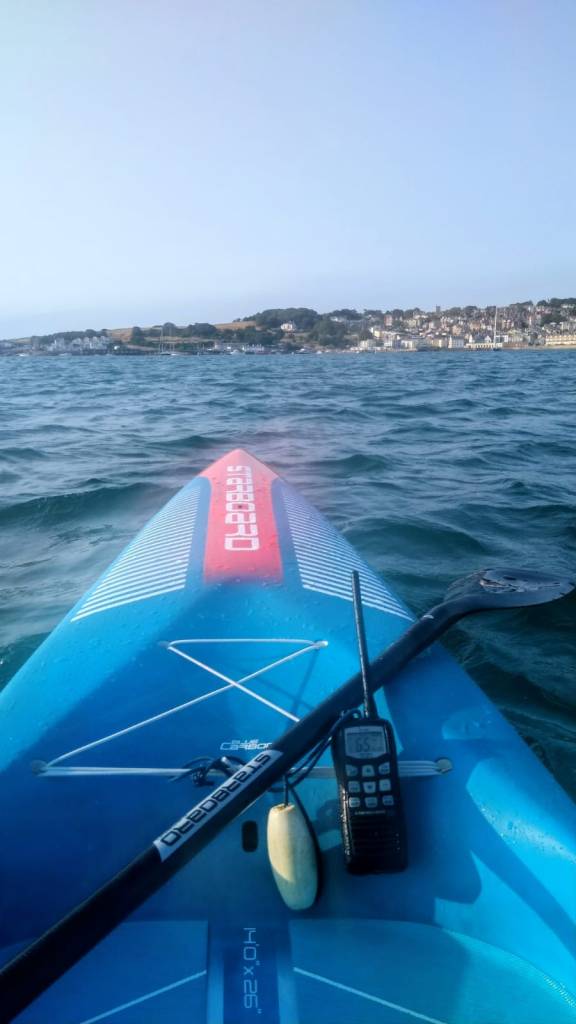
I’ve been doing a lot of SUPing this year and in February bought my first hard SUP, a 14′ x 26″ Starboard Allstar. This was a step up from an inflatable 12′ X 32″ Bluefin Cruise I’d been using till now.
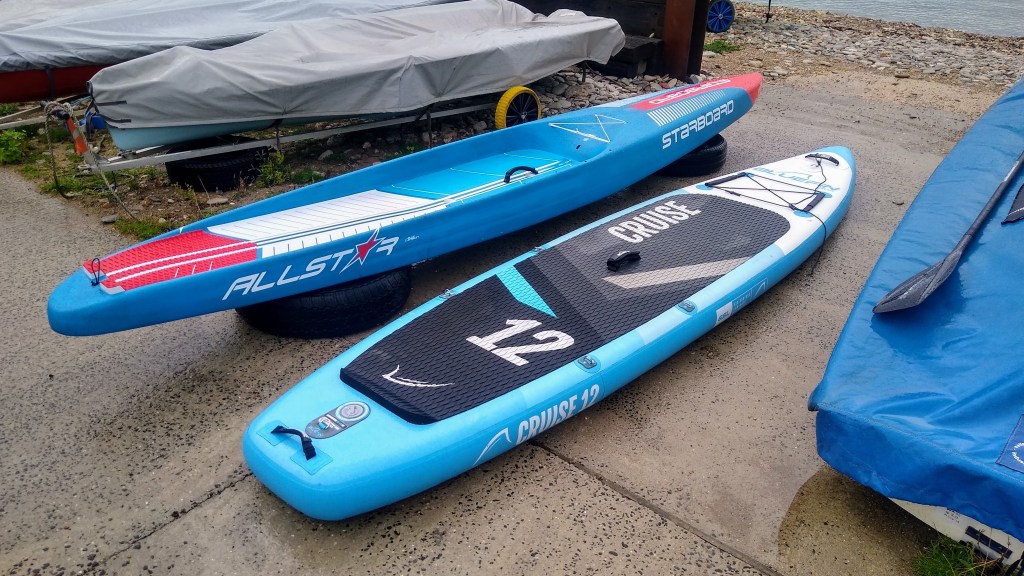
I was well advised by the SUP company in Southampton, UK to go for the 26″ width board, which I think turned out to be a good choice for my ability level and the sea conditions I predominantly SUP in; SUPing in waves is way harder than flat water.c
Getting started
I remember well the first time I tried the Allstar in the sea in February, it was about F4 onshore and a bitterly cold winter day. I instantly fell off it, then went swimming a couple of more times before deciding to try it again on calm water.
The next time I went out, whilst not dead calm, the waves were much smaller. I paddled out about 100m, dropped to my knees, turned the board around, stood up and paddled back. I think was a good learning method to get started with.
Many weeks of practice later, and I’m pretty confident on the board in a variety of conditions. The toughest challenge I’ve managed was paddling in F5-6 easterly onshore conditions. Swanage Bay usually shuts down in easterlies but it’s a reasonably safe time to go SUPing as there is no danger of being blown out to sea. On the F5-6 day, I paddled out into the waves, and then back trying to get planing which I managed couple of times. The Allstar was just fantastic in those conditions.
The bits I practice most now are step back (or pivot turns) which are much harder on the Allstar than the Bluefin, and paddling across waves, which is good for balance and technique. These I do in shallower water which makes getting back on the board easier when I fall off.
Allstar race SUP vs Bluefin inflatable – a comparison
It’s an unfair comparison really as the Bluefin and Allstar are designed for very different purposes, but the difference is huge especially in waves.
I race sailing dinghies, and the Allstar feels much more like a boat than the Bluefin. Its pointy bow cuts through waves easily and it pops up out of waves when paddling downwind. The Allstar is very fast and there’s simply no comparison with the glide, speed and tracking.
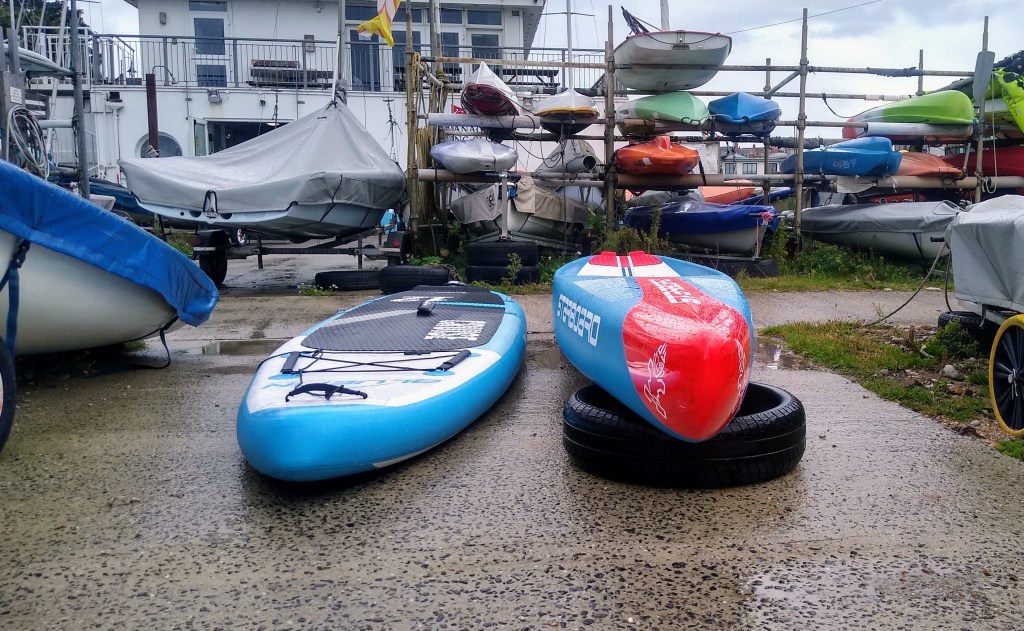
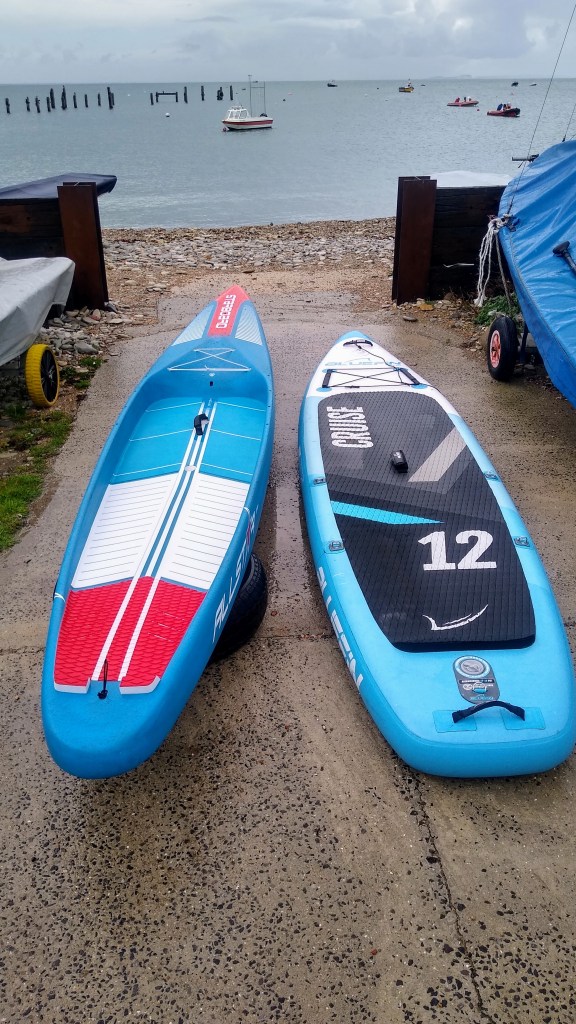
It’s not all one way though; the inflatable is much more stable and easier to paddle, it has more room for storing kit and where the Allstar is quite delicate, the inflatable is a very tough piece of kit.
If I have limited time, I find myself going for a quick paddle on the Bluefin; I can chuck it on the the roof of the car, drop it onto beach and shingle and I don’t need to be super careful with it. The Allstar on the other hand is transported in a padded bag, needs rinsing, drying and careful storage which needs enough room.
Bonus points
There’s been a really nice side effect from SUPing with the Allstar, which is that I now find paddling the Bluefin super easy. The Allstar has made me a better SUPer and hugely improved my balance and technique.
So much so, that during the Summer months when we had onshore wind and surf, I was able to paddle out through the waves on the Bluefin, stay upright in the waves and try to surf back in. I’m still working on the ‘surf back in’ bit, but it was cool to keep upright in the waves and chop.
SUPing, just great exercise
When the wind isn’t right for solo sailing which is much of the time (too much, too little, wrong direction), SUPing is my go-to exercise these days and it trains muscle groups and balance that dinghy sailing and kayaking doesn’t.
If you haven’t tried SUPing, rent one somewhere, or get started with an inflatable board. Spend a bit more money on a decent lightweight carbon paddle if you can, it makes a big difference.
If you’re in the UK, check out the SUP company in Southampton, they really helped me get started with the right kit. I’d quite like a quicker inflatable touring SUP, or a surf SUP next.. hmm..
 Klaus Harris